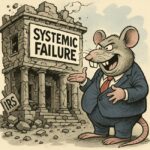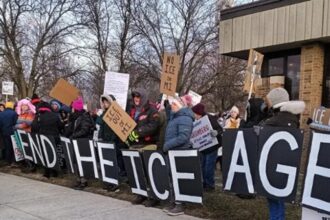
For years, Americans have been told that the country’s institutions — its courts, its police departments, its federal agencies — are strong enough to withstand political pressure. But a growing body of evidence suggests that the guardrails meant to protect civil liberties and democratic norms are eroding, particularly in the realm of immigration enforcement.
A series of recent incidents, scattered across different states and involving different communities, point to a deeper pattern: a system increasingly comfortable operating in the shadows, with diminished transparency, weakened oversight, and a willingness to use state power in ways that would have once been unthinkable.
Local Police as Federal Deputies: Detroit’s Troubling Coordination with Border Patrol
In Detroit, two police officers were suspended after coordinating with U.S. Customs and Border Protection during routine policing — an explicit violation of department policy. The incidents, which occurred in December and February, resulted in two persons being taken into federal custody after a traffic stop when officers instead requesting translation assistance — contacted Border Patrol that conducted an immigration investigation and take them in custody.
Detroit Police Chief Todd Bettison condemned the actions, emphasizing that the department does not engage in immigration enforcement. But the fact that the violations were uncovered only through a body‑camera audit — and that one incident occurred just days after Bettison assured the City Council that such coordination does not happen — raises questions about how widespread these practices may be and how often they go undetected.
This is the kind of institutional drift that signals deeper rot: when individual officers feel empowered to bypass policy, collaborate with federal agencies in secret, and expose residents to life‑altering consequences without oversight.
A Student Wrongfully Deported — Court Forced to Intervene
In Boston, a federal judge ordered the government to return 19‑year‑old Babson College student Any Lucia Lopez Belloza after she was detained at Boston’s airport on November 20, as she prepared to fly home to Texas for the Thanksgiving holiday. And reportedly was mistakenly deported to Honduras. The Trump administration acknowledged the error but failed to remedy it, prompting the court to step in.
Judge Richard Stearns wrote that the Executive Branch cannot “arrogate to itself” the authority to prejudge the legality of its own actions. His ruling underscored a basic democratic principle: the government cannot be allowed to violate someone’s rights and then decide unilaterally whether the violation matters.
That a federal judge had to compel the government to undo an acknowledged mistake is itself a sign of institutional decay. It suggests an agency apparatus that has grown so insulated from accountability that even clear errors are met with inertia.
Detention as Punishment for Speech: The Case of Leqaa Kordia
Perhaps the most alarming example of democratic backsliding is the nearly year‑long detention of Palestinian protester Leqaa Kordia. Arrested at a pro‑Palestine demonstration in April 2024, she was released the next day when charges were dismissed. Yet nearly a year later, ICE detained her during a routine check‑in — despite a judge twice ruling she posed no threat and could be released on bond.
Her seizure in detention, the chaining of her hands and legs during hospitalization, and the refusal to allow her contact with family or counsel paint a picture of a system that treats civil liberties as optional. Kordia’s attorneys argue she is being targeted for her political speech, a claim bolstered by a federal judge’s earlier finding that the administration’s detention of pro‑Palestine students was unconstitutional and intended to chill dissent.
The DHS spokesperson’s response — that “for many illegal aliens this is the best healthcare they receive in their entire lives” — is a stark example of the contemptuous posture federal agencies increasingly display toward the people in their custody.
According to the DHS Kordia had originally entered the country on a student visa but stayed after it expired. Her immigration attorney said she had a pending asylum application at the time of her arrest by ICE and that she currently has an approved family petition – a first step toward permanent residence – through her mother, a US citizen.
An Irish Immigrant Held for Months in Harsh Conditions
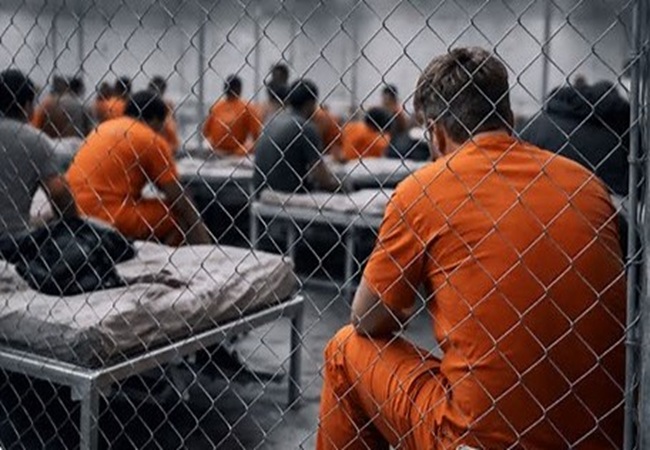
There is also the story of Irish national Seamus Culleton, detained for five months in an ICE facility despite having a valid work permit and a pending green card case. His wife describes the conditions as “a concentration camp,” citing psychological torment, lack of fresh air, and pervasive fear of staff.
When a system treats people this way even when they have legal status and ongoing immigration cases, it signals a bureaucracy that no longer sees itself as bound by proportionality or due process.
A Pattern, Not a Series of Accidents
Taken together, these cases reveal a troubling through‑line:
- Local police quietly acting as immigration agents.
- Federal agencies deporting people by mistake — and resisting correction.
- Detention used as a tool to suppress political speech.
- Medical neglect and punitive conditions in facilities with little oversight.
- A DHS increasingly dismissive of judicial rulings and public scrutiny.
This is not simply a matter of individual misconduct. It reflects a structural shift in how immigration enforcement operates — more aggressive, less transparent, and more willing to push or break legal boundaries.
The Democratic Backslide No One Wants to Name
Since Trump’s second term began, civil liberties groups, legal scholars, and even some judges have warned that DHS and ICE are operating with expanding autonomy and shrinking accountability. The agency’s posture toward protesters, students, and even lawful residents suggests a willingness to use immigration law as a political weapon.
Democratic norms rely on constraints: judicial review, public transparency, and the expectation that government agencies will follow their own rules. When those constraints erode, the system doesn’t collapse overnight. It decays quietly, case by case, until the exceptions become the norm.
The stories emerging from Detroit, Boston, Texas, and New Jersey are not isolated incidents. They are symptoms of a system drifting away from democratic principles and toward something more arbitrary, more punitive, and more dangerous.
And unless the public demands accountability, this new normal will harden into permanence.