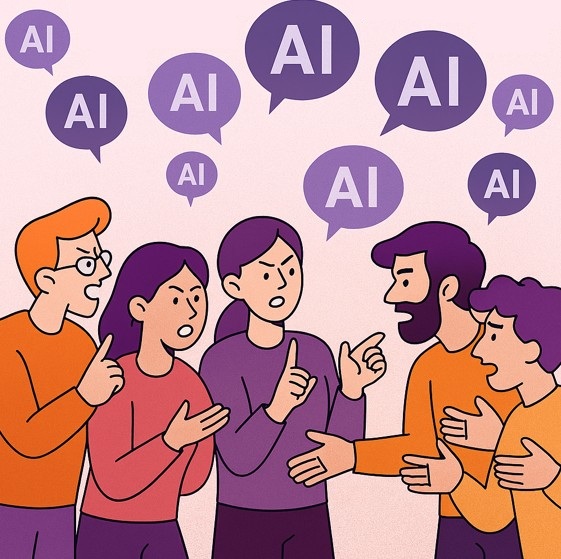
We’ve always hunted for truth. But in the age of AI, the hunt itself has changed. Machines don’t redefine truth — they redefine how we argue about it. And that lack of consensus isn’t a weakness; it’s a mirror reflecting the complexity of our human story.
For as long as humanity has recorded its past, we have wrestled with the meaning of truth. From religious texts to political speeches, from history books to courtroom testimonies, truth has always been contested, shaped, and sometimes weaponized. What is changing today is not the struggle itself, but the arena in which it plays out. Artificial intelligence has entered the conversation, and with it, the very way we argue about truth is being transformed.
Truth as a Negotiated Space
Traditionally, truth has been seen as something fixed — a set of facts waiting to be discovered. Yet history shows us that truth is often negotiated. Different communities emphasize different narratives, and power structures influence which stories are amplified and which are silenced. AI doesn’t erase this complexity; instead, it magnifies it.
AI systems are trained on vast amounts of human data, which means they inherit our biases, our fractures, and our disagreements. When an AI produces controversial or conflicting statements, the debate is not just about the content itself — it’s about whether machines can be trusted as arbiters of truth. That question unsettles people, because it forces us to confront the fragility of consensus.
The Mirror Effect of AI
Here lies the paradox: AI doesn’t redefine truth, but it redefines how we argue about truth. The lack of consensus isn’t a failure — it’s a mirror showing us how diverse, fractured, and complex our human narratives really are.
This mirror effect can be uncomfortable. It reveals that our disagreements are not new; they have always existed. What AI does is strip away the illusion of unity and expose the raw plurality of perspectives. In doing so, it challenges us to ask:
- Who decides what counts as truth?
- Should machines echo majority views, minority perspectives, or both?
- How do we balance free inquiry with protecting human dignity?
The Responsibility of Humans
AI may be a powerful tool, but it is not a moral compass. It cannot tell us which stories deserve remembrance, which voices deserve amplification, or which narratives should be protected from distortion. That responsibility remains ours.
The hunt for truth, therefore, is not about outsourcing judgment to machines. It is about using AI as a catalyst for dialogue, a reminder that truth requires human responsibility, humility, and courage.
Moving Forward
In the end, truth is not a static object waiting to be uncovered. It is a living conversation, shaped by memory, evidence, and debate. AI has simply made that conversation louder, more visible, and more urgent.
If we embrace this reality, we can move beyond the fear that consensus is slipping away. Instead, we can recognize that the diversity of perspectives is itself a form of truth — one that demands careful listening, respectful debate, and a commitment to justice for all.