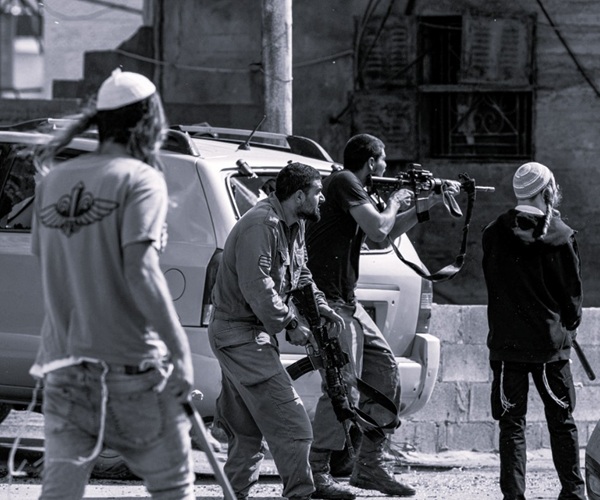
Across the West Bank and beyond, recent reporting has painted a stark picture of how power, rights, and accountability are distributed — and withheld. Three separate stories, taken together, reveal a troubling pattern: escalating settler violence against Palestinians, a political system that appears to tolerate or even enable it, and a broader international climate in which speaking out about injustice is increasingly contested.
Coordinated Settler Expansion and Displacement
Reuters recently documented the growth of outposts like Or Meir, a small cluster of prefabricated structures perched above Road 60 in the occupied West Bank. Though modest at first glance, such outposts have historically expanded into large settlements — part of a strategy that some Israeli officials openly describe as a way to prevent the emergence of a Palestinian state.
This expansion is not merely administrative. Reuters interviewed a Palestinian family who described being driven from their land by attackers wielding Molotov cocktails. Social‑media posts from the outpost celebrated the removal of local Palestinian communities and framed the surrounding area as “strategic territory to be secured.”
Although the Reuters reporting may seem balanced after summarizing it, I must point out that the outlet adopted a Jerusalem-centric narrative when describing the subjects of this story. Instead of identifying the family as Palestinian, Reuters repeatedly referred to them as “Bedouin herders” throughout the article. This terminology reflects a broader pattern in Israeli propaganda aimed at dehumanizing Palestinians and erasing their presence in Palestine — portraying them as outsiders or invaders. The goal is to sway international opinion, justify the occupation, and present the contested land as “no man’s land” waiting for a rightful owner.
These families are not simply “nomadic herders” as Reuters article is painting — they are Palestinians repeatedly uprooted as land is seized around them. The pattern of displacement creates conditions where communities are forced into increasingly restricted spaces, deepening their vulnerability and eroding their ability to live freely on their own land.
Violence as a Systemic Feature, Not an Aberration
A second report highlights a disturbing escalation: settlers entering a Palestinian home in the village of Samu, injuring a mother and her children, and even harming the family’s livestock. Similar incidents — including shootings near the settlement of Anatot — reflect a broader reality in which weapons are used against Palestinian civilians with little consequence.
Israeli authorities often describe such events as isolated acts by fringe extremists. But the reporting argues that this framing obscures a deeper truth: the violence persists because the political and security establishment rarely imposes meaningful consequences on settlers who attack Palestinians. Investigations stall, indictments are rare, and the presence of security forces often fails to protect the vulnerable.
This is not simply a matter of individual wrongdoing — it reflects a system that consistently shields one population while leaving another exposed. The result is a cycle of harm that strips Palestinians of safety, dignity, and bodily autonomy. What makes this even more painful is the muted response from the international community, which has the influence to demand accountability but too often chooses silence.
Free Speech and the Struggle to Speak About Injustice
The third story shifts to the United Kingdom, where U.S. Supreme Court Justice Amy Coney Barrett recently expressed concern about restrictions on speech. She pointed to cases in which dissenting or unpopular opinions have faced legal consequences — something she contrasted with the protections of the U.S. First Amendment. A U.S. State Department report echoed these concerns, citing “serious restrictions on freedom of expression” in the U.K.
This debate resonates deeply with me. Free speech is a universal human right, and it becomes especially vital when discussing issues of war, occupation, and human rights. People must be able to condemn violence, call out abuses, and demand justice — whether or not those views are comfortable or popular. Criticizing government actions, including those of Israel, is not the same as targeting individuals or communities. It is an essential part of holding power to account.
At the same time, others — including Jewish communities around the world — have the right to express their own views, even when they disagree. The point is not to silence anyone, but to ensure that all people can speak without fear of criminalization or retaliation. When speech is restricted, the space for confronting injustice narrows, and those suffering on the ground are left even more isolated.
A Call for Accountability and Humanity
In sum, these stories reveal a world in which violence, displacement, and suppression of dissent intersect. In the West Bank, Palestinians face escalating attacks and systemic neglect. Internationally, the ability to speak openly about these realities is increasingly contested.
My hope is simple: that people everywhere — regardless of identity or background — use their voices to oppose injustice and advocate for the protection of human life. The suffering in the West Bank did not begin yesterday, and it will not end without sustained pressure, moral clarity, and a willingness to confront uncomfortable truths.
We may disagree on many things, but we share a common humanity. And it is precisely that humanity that demands we speak out.