Across the United States, a series of recent events has intensified public concern about the direction of federal immigration enforcement and its impact on civil liberties, community safety, and the wellbeing of children.
In Virginia, a Canadian development company withdrew from a planned sale of a warehouse after learning the facility would be converted into an Immigration and Customs Enforcement (ICE) detention center. The company stated that the transaction “will not be proceeding,” reflecting growing unease among private-sector actors about the expanding use of warehouse-style structures for detention. This follows ICE’s recent $70 million purchase of a similar facility in Arizona, signaling a shift toward large-scale, industrial detention environments.
At the same time, debates around children’s rights and protections have intensified. Proposals to restructure federal oversight of K–12 education — moving it under the Department of Labor — have raised alarms among advocates who fear that weakening educational institutions, loosening child labor laws, and reducing safeguards for minors could expose vulnerable children to exploitation. Critics argue that these policy shifts, taken together, risk creating conditions where unaccompanied or marginalized youth become increasingly susceptible to harm.
Public concern has also manifested in student-led demonstrations across the country. In Nebraska, a peaceful protest against ICE operations turned violent when a driver displaying a political flag accelerated into a student holding a sign. In Texas, another student protest was disrupted when an adult man exited his vehicle and physically assaulted teenagers, leading to his arrest on assault charges. These incidents underscore the heightened tensions surrounding immigration enforcement and the risks faced by young people exercising their constitutional right to assemble.
Local governments have begun responding. In Ann Arbor, Michigan, the City Council unanimously approved new restrictions on ICE activity on city property, requiring warrants for access to non-public areas and prohibiting the use of municipal lots as staging grounds. The resolution also challenges the practice of masked federal agents operating within city limits. Local leaders cited concerns about excessive force, lack of transparency, and the erosion of public trust.
Meanwhile, in a significant legal development, a federal judge temporarily halted the termination of Temporary Protected Status (TPS) for approximately 350,000 Haitian residents. The ruling prevents the policy change from taking effect while litigation proceeds, offering temporary relief to families who have lived in the U.S. for years under humanitarian protections.
In Michigan, community organizations report that an average of twelve residents per day are being detained by federal immigration authorities. In response, neighborhoods have formed rapid-response networks to document encounters, support affected families, and ensure that constitutional rights are upheld. These grassroots efforts reflect a broader national pattern: when institutions appear strained or unresponsive, communities often step in to protect one another.
Taken together, these developments paint a picture of a nation grappling with profound questions about justice, accountability, and the treatment of vulnerable populations. They also highlight the essential role of civic engagement — peaceful protest, local governance, legal advocacy, and community solidarity — in shaping the country’s future.
At moments like this, democratic participation becomes not just a right but a responsibility. Whether through voting, public testimony, community organizing, or supporting those directly affected, people across the country are finding ways to stand up for the values they believe should define the nation.
But I truly don’t believe that will be enough. This rogue government has demonstrated, numerous times, its unwillingness to uphold the oath it swore to this Republic and its Constitution. It continually undermines the justice system and seeks new ways to impose its own.
Hypothetically speaking, if the allegations in the Epstein files contain even a degree of truth — and I see no reason to dismiss them outright — then trusting a president who is mentioned 38,000 times in connection with crimes against children over a span of 30 years raises serious concerns. We should ask ourselves whether the 2016 election — when two individuals named in those files competed for the presidency — was actually a struggle for power meant to protect their way of life. And we must consider whether someone implicated in such allegations can truly be trusted with the position they hold.
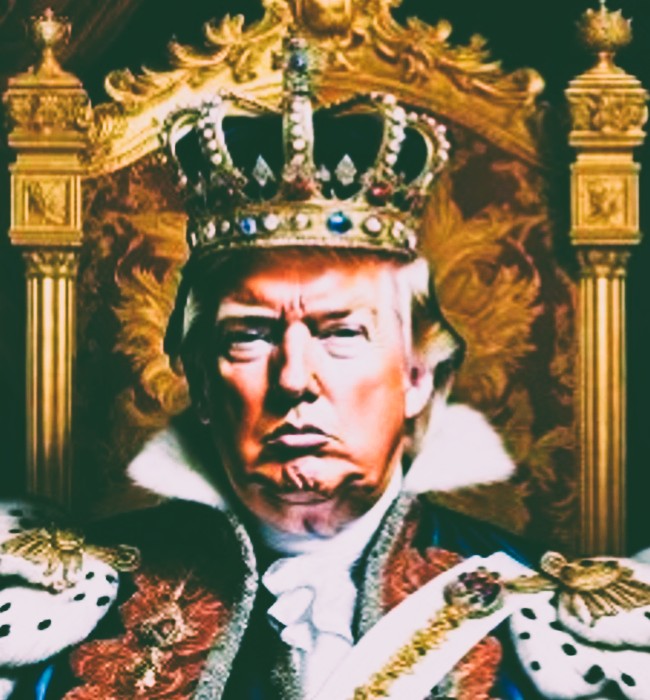
Trump is now threatening the upcoming midterm elections by saying he will only recognize the results if they align with his beliefs. He introduced the “fake news” narrative to control the media. He promotes the conspiracy of a “stolen election” to shield himself from scrutiny and to avoid questions about whether he himself came to power through a compromised process. He supports Project 25, whose primary goal is to transform our democratic republic into an authoritarian regime. He amplifies the “white replacement” theory to spread fear and divide the nation. At this late stage of his life, playing the role of the king he believes himself to be, he has nothing to lose. People like that are dangerous, and they will do everything in their power to remain in power.
So the question becomes: can Trump and his loyalists positioned in the House, Congress, and the military be peacefully replaced through democratic elections? It is difficult to believe so. January 6th was eye‑opening for many of us, revealing the lengths he is willing to go to stay in power. I believe he will never willingly give up that crown again. He now has a loyal secret militarized police faction within DHS. He has far more control over the U.S. military than he did in his first term. By every definition, he behaves like a dictator — and dictators do not step down voluntarily.
The path forward depends on sustained public involvement, a commitment to lawful and peaceful action, and a shared determination to ensure that the United States remains a place where human dignity and constitutional protections are upheld for all. The only question we are still left with is a difficult one: how can the will of the people be enforced against a leader who refuses to follow the law.