In today’s America, citizenship is no longer a shield — it’s a target. Three recent cases expose a disturbing trend: the weaponization of immigration law, border enforcement, and bureaucratic technicalities to punish and silence individuals who, despite their service and loyalty to this country, are treated as disposable.
Case I: A Veteran Betrayed
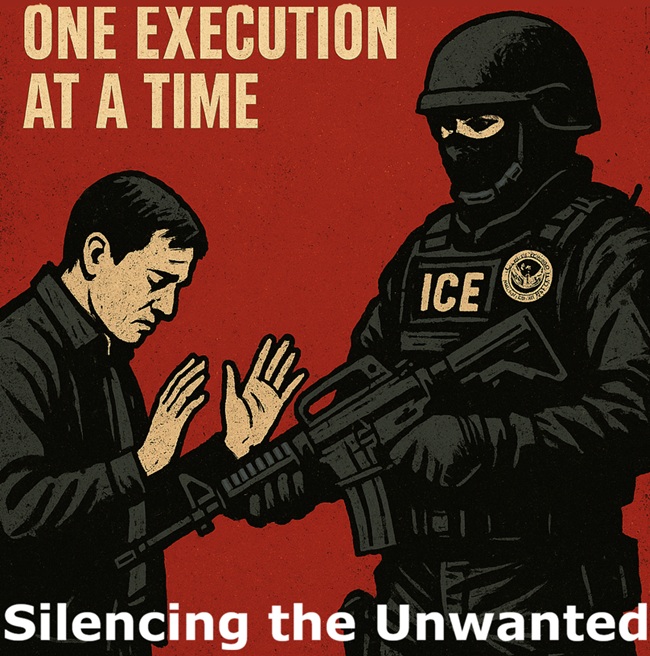
Godfrey Wade, a U.S. Army veteran who immigrated from Jamaica at age 15, has lived in the United States for 50 years. He served honorably in the military, raised a family, and built a civilian life in Georgia. But in September, a routine traffic stop for failing to use a turn signal led to his arrest for driving without a license — and then to his transfer into ICE custody for deportation.
Wade now languishes in an overcrowded detention center, sleeping on the floor amid sewage leaks and broken urinals. His fiancé, April Watkins, described the betrayal: “He wasn’t born in this country, and still, he loves this country enough that he signed up to serve its Military, and now fifty years later, when he needs this country, this country is turning its back on him.”
The Trump administration rescinded protections for veterans in 2024, stating that only active-duty members may be shielded from deportation. Wade’s honorable discharge, once a badge of service, now offers no protection.
Case II: Born on a U.S. Base, Deported Anyway
Jermaine Thomas was born in 1986 on a U.S. Army base in Germany. His father, a U.S. citizen and Army veteran, raised him in Florida. But after a trespassing charge stemming from an eviction, Thomas was jailed — and then deported to Jamaica, a country he had never visited.
The courts denied his appeal, citing technicalities in birth registration and his father’s residency status at the time of his birth. Thomas, devastated, told reporters that during his deportation flight to Jamaica, “I was looking out the window on the plane and hoping the plane crashes and I die.”
The Department of Homeland Security labeled him a “violent, criminal illegal alien,” despite his ties to the U.S. military and his upbringing in America. Bureaucratic ambiguity became a tool of exile.
Case III: A Citizen’s Rights Violated at the Border
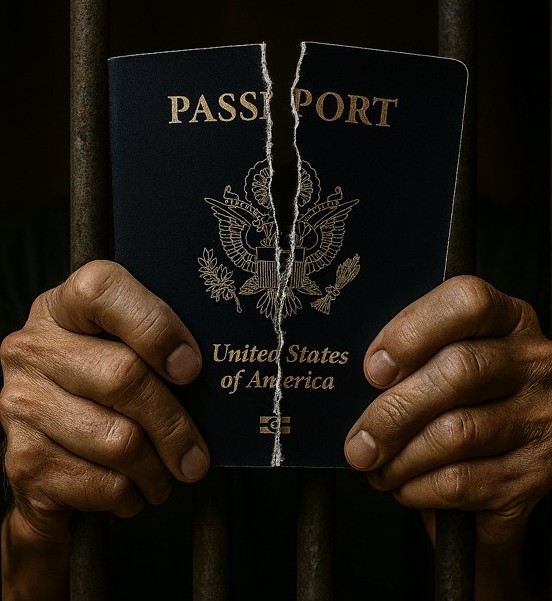
Wilmer Chavarria, a naturalized U.S. citizen and Vermont school superintendent, was detained for hours at Houston’s George Bush Intercontinental Airport after returning from Nicaragua. Federal agents demanded access to his electronic devices without a warrant, claiming he was not protected under the Fourth Amendment.
Chavarria refused to surrender passwords to his school-issued laptop and tablet, citing concerns over student privacy. His devices were taken, searched, and returned — without explanation. He is now suing the Department of Homeland Security, challenging the legality of warrantless searches in what critics call a “constitution-free zone” within 100 miles of U.S. borders.
The ACLU notes that two-thirds of Americans live in this zone, where constitutional protections are routinely suspended.
The Bigger Picture: Silencing Dissent Through Citizenship Erosion
These cases are not isolated. They are symptoms of a deeper rot — where citizenship is conditional, rights are negotiable, and dissent is punished through bureaucratic cruelty. Traffic stops, birth certificate technicalities, and border searches are the scapegoats. The real reason? These individuals likely appear on lists of those who oppose Israel’s war crimes in Gaza.
In a country increasingly influenced by foreign interests, particularly Israeli intelligence and lobbying networks, dissent is not tolerated — it is targeted. Second-class citizens are deported. First-class citizens are doxed, smeared, and financially strained. The goal is simple: redirect their focus from Palestinian suffering to their own survival.
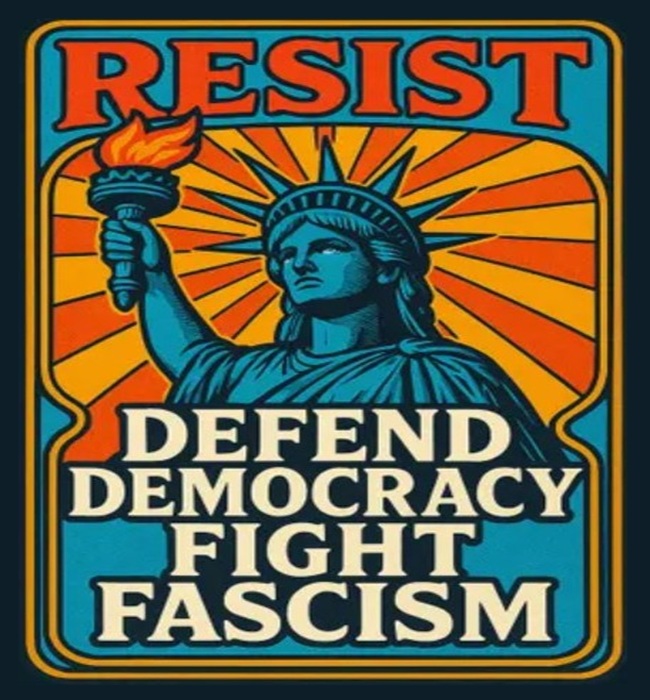
This is not democracy. This is not freedom. This is a system that mirrors authoritarian regimes, where silence is enforced and justice is denied. When veterans, children of soldiers, and naturalized citizens are treated as threats for asserting their rights or expressing political views, we must ask: who really controls the levers of power?
If America continues down this path, citizenship will become meaningless, and the Constitution will be nothing more than a relic. The erosion of rights is not just a legal crisis — it is a moral one. And it must be stopped.