My Bosnian American friend Alen’s journey to American citizenship began in the shadows of Bosnian war for independence. After fleeing Bosnia and Herzegovina war nightmare and spending nearly six years in a refugee camp inside U.S. Military barracks in Germany, he arrived in the U.S. in 1997 with little understanding of the path to naturalization. After just three weeks and little bit of knowledge of English language he starts working and paying his taxes. And hoping to become U.S. citizen fallowing the rules and obeying the law eagerly awaiting five years mark to apply for the citizenship as a part of legal process to start belonging again.
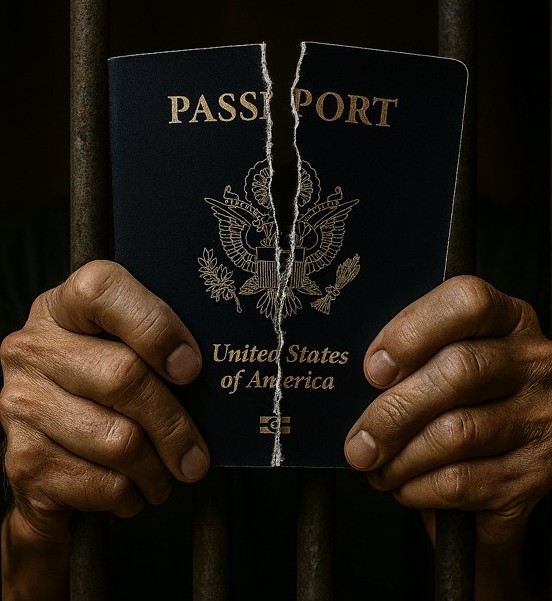
Now after 28 years of his life that he spent in the U.S. being law abiding citizens, continuing playing by the rules, voting, attending jury duties, building his life and trying to do his best to be productive part of our society, Alen is fearing — like many naturalized citizens Alen is experiencing a chilling shift — from feeling protected to feeling vulnerable and betrayed by the country he give his Oath of Allegiance.
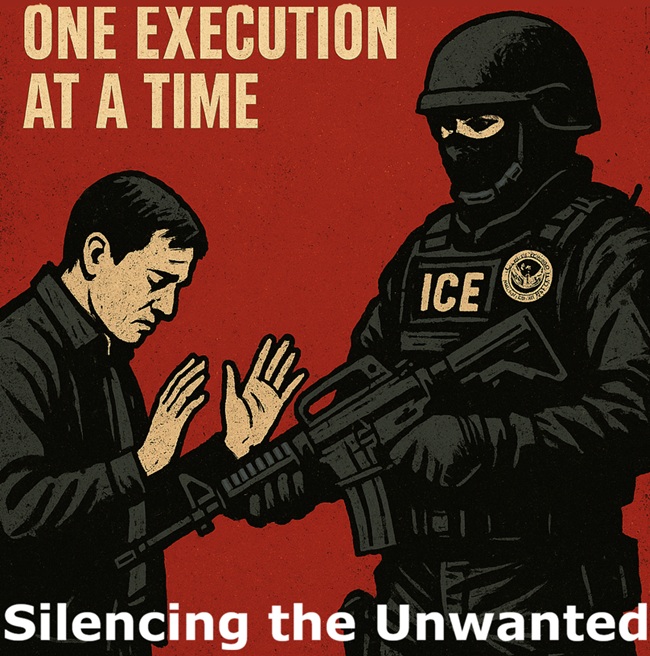
Alen told me he is not fearing of being deported, but he’s fearing he will not have a chance to fight staying, to tell his story to those in charge who are now holding his future in their hands. He is fearing that everything he had build and acquired by now — by his hard work and dedication — it will be repossessed and Alan again without nothing exiled into unknown. He told me he rather dies by the firing-squad execution here in the U.S. than face new beginning.
Fear in the Age of Impersonation and Raids
The fear isn’t abstract. In California, a man impersonating an ICE agent pulled a teenager over at gunpoint, demanding proof of citizenship. Though the Department of Homeland Security confirmed he was not affiliated with ICE, the incident underscores a disturbing trend: private citizens weaponizing immigration rhetoric to intimidate others.
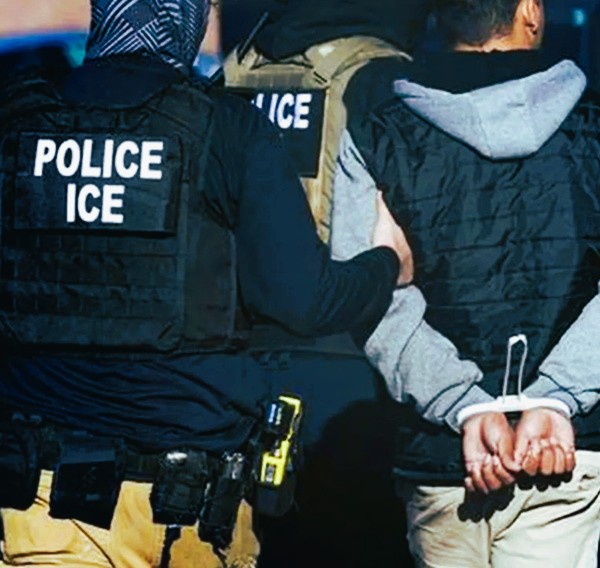
Meanwhile, official immigration enforcement has surged. As of September 2025, nearly 60,000 people were in ICE detention — over 70% of them with no criminal record. Despite administration claims of targeting “criminal aliens,” the reality paints a broader, more indiscriminate picture. Even U.S. citizens and green card holders are being swept into the chaos, often traumatized by raids or mistaken identity.
A Native American Nearly Deported
Leticia Jacobo, a 24-year-old Native American woman born in Phoenix, was nearly deported after being arrested for driving with a suspended license. Despite her tribal ID and birth certificate, an ICE detainer was issued — allegedly due to a clerical error. Her family believes racial profiling played a role. “Why would they make a mistake with someone that’s constantly coming in?” her aunt asked, pointing to Jacobo’s prior interactions with the same jail.
Her mother spent the night at the jail with her daughter’s documents in hand, determined to prevent a wrongful deportation. Jacobo was released the next morning, but the incident left deep scars — and lingering questions about systemic bias.
Denaturalization and the Erosion of Trust
Adding to the anxiety, the Justice Department has signaled increased efforts to denaturalize immigrants deemed security risks or found guilty of certain crimes. Even high-profile figures like Zohran Mamdani, New York City’s mayor-elect, have faced threats to their citizenship status.
For many, the message is clear: even naturalization may not be a permanent shield. State Senator Cindy Nava, once undocumented and now a citizen, says she’s never seen such widespread fear among naturalized Americans. “Now the folks that I know that were not afraid before, now they are uncertain of what their status holds.”
The Fragility of Belonging
The promise of citizenship once offered a sense of belonging, safety, and shared responsibility. But for many immigrants and naturalized citizens, like my friend Alen, that promise now feels conditional — subject to shifting policies, mistaken identities, and the whims of enforcement.
As me and many others continue to advocate for inclusion and justice, their stories remind us that citizenship is more than paperwork. It’s a covenant — one that must be honored not just in law, but in spirit.
Parallel Stories of Fear, Resilience, and Uncertainty
To complement my friend Alen’s experience and the broader narrative of immigrant anxiety, several recent surveys and reports reveal how widespread and deeply personal these fears have become in 2025.
Survey Insights: Fear Is Rising, But So Is Determination
A joint survey by the New York Times and the Kaiser Family Foundation found that immigrants are experiencing historic levels of fear, especially those in undocumented or mixed-status families. Yet, despite the anxiety, most immigrants say they would still choose to come to the U.S. again — and plan to stay.
- Many reported negative impacts on their mental health, economic stability, and trust in institutions.
- Immigrants are increasingly avoiding public services and healthcare out of fear of being targeted.
- Even naturalized citizens are reconsidering their safety and status, echoing the uncertainty voiced by Senator Cindy Nava in your original post.
Mental Health Toll: Trauma Beyond Borders
According to the American Psychological Association, the psychological toll of immigration enforcement — including detentions, deportations, and impersonations — is compounding trauma for many immigrants.
- Immigrants who have survived violence or exploitation are now facing chronic stress and fear of family separation.
- Mental health professionals are calling for culturally responsive care to address this growing crisis.
Silence Among Survivors: Fear of Seeking Help
The Alliance for Immigrant Survivors released a report showing that immigrant survivors of abuse are increasingly afraid to seek help.
- Abusers are exploiting the current climate, knowing victims may fear deportation or retaliation.
- Advocates say this silence is creating dangerous conditions, especially for women and children in vulnerable situations.
Families on Edge: Preparing for the Worst
The Urban Institute’s Well-Being and Basic Needs Survey found that immigrant families are bracing for policy changes, even when they have legal status.
- Mixed-status households — where some members are undocumented and others are citizens — are particularly affected.
- Many families are preparing emergency plans, gathering documents, and avoiding any interaction with law enforcement.
These stories reinforce the emotional gravity and show that Alen’s shaken belief in citizenship is not an isolated case — it’s part of a broader, national reckoning.
Why are we really witnessing forcible deportations and street kidnappings by ICE?
Deportation is nothing new. Biden deported 4 million immigrants — Obama did too. It exists in every country for undocumented individuals who are often viewed as security threats or who have unresolved legal issues preventing them from becoming lawful citizens.
But in today’s America, things have spiraled out of control. Immigration policing is being weaponized as a tool to “purify” the nation, indiscriminately deporting immigrants regardless of their legal status. Even naturalized U.S. citizens with no criminal history are being taken into custody, their assets seized and deported without due process.
The U.S. “system” became alarmed when it witnessed solidarity among people of different races and ethnicities during movements like Black Lives Matter and the Anti-Genocide / Pro-Palestine protests. Now, it’s actively working to dismantle that unity. At this moment, the system is targeting Latino newcomers — labeling them as “criminals.” Simultaneously, under the guise of a “terrorism threat,” it’s moving to purge Muslims.
Once Latinos and Muslims are removed, Black Americans will be next. After that, the system will turn on the LGBTQ+ community, followed by non-submissive women. This is the plan I’ve come to understand through my deep infiltration into the MAGA and Christian Nationalist movements. I know what I’m talking about. This marks the end of the America we once knew — and the beginning of the “Fourth Reich,” a so-called “purification of the American nation.”
Only white people with deep ancestral roots in America — pure Anglo-Saxon and Germanic, or the “Old Stock” as they call themselves — are deemed worthy of governing and accumulating wealth.
The system chose Trump as its frontman precisely because his narcissistic personality entertains the masses, distracts the public, and numbs Americans to reality by eroding their moral compass.
The system is winning.
What Can We Do to Make Things Right?
Mobilize Politically
- Vote in every election — local, state, and federal. These are the levers of power.
- Support candidates who stand for justice, inclusion, and human rights.
- Run for office or help others who represent your values do so.
Raise Awareness
- Share stories — like this — with clarity and courage. Personal narratives shift public opinion.
- Use social media strategically to amplify marginalized voices and expose abuses.
- Engage with journalists and creators who can help bring these issues to light.
Build Coalitions
- Unite across movements — racial justice, immigrant rights, LGBTQ+ advocacy, and more.
- Join or support grassroots organizations doing the work on the ground.
- Create community spaces for dialogue, healing, and organizing.
Educate and Equip
- Host teach-ins, workshops, and forums to inform others.
- Push for curriculum reform in schools to include honest history and civic education.
- Train in nonviolent resistance, legal rights, and digital security.
Support Economically
- Donate to legal defense funds and mutual aid networks.
- Boycott companies that fund or enable oppressive systems.
- Invest in community-owned businesses and media.
Protect the Vulnerable
- Offer sanctuary — literally or figuratively — to those under threat.
- Know your rights and help others know theirs.
- Document abuses safely and legally.
There are millions of people across the country who feel the fear to be deported from the U.S. where they have built their life, contributed, followed the law, and embraced this country as their own. And now they feel like a target in the place they call home, they feel alienation, they feel betrayal. This is not just heartbreaking — it’s unjust. But there are also millions of people who are fighting for justice, for dignity, and for the rights of people to live in peace and safety.
For those who are in the fear to be deported here are a few things they can do right now to feel a little more grounded and supported:
- Know Your Rights
Even as a naturalized citizen and legal immigrant, it’s important to know your legal rights in encounters with immigration or law enforcement. You have the right to:
- Remain silent
- Refuse to let ICE enter your home without a warrant signed by a judge
- Speak to a lawyer before answering questions
Organizations like the ACLU and NILC have resources and hotlines for legal support.
- Connect with Local Advocacy Groups
There are immigrant rights groups in Michigan and nationwide that offer legal aid, community support, and advocacy. Some to look into:
- Michigan Immigrant Rights Center (MIRC)
- National Immigration Law Center (NILC)
- United We Dream
They can help you understand your legal standing and connect you with others in similar situations.
- Document Everything
Keep your citizenship documents, passport, and any legal paperwork in a safe, accessible place. Consider making digital copies and sharing them with a trusted friend or family member.
- Build a Safety Network
Let trusted people know about your concerns. Create a plan in case of emergency — who to call, where to go, how to access legal help. You don’t have to face this alone.
- What I found most disturbing is the fact that U.S. naturalized citizens who have followed all rules and regulations and lived here for decades believing that they have earned their place, that they are Americans, now are forced to feel otherwise.
Their existence here is not a mistake — it’s a testament to their strength and resilience, and their love of America. They didn’t come to U.S. because they hate U.S. or America’s way of life, they come here to be part of it.