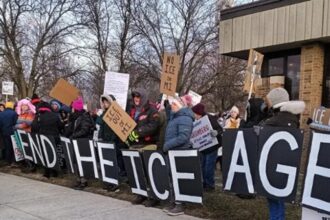
Across multiple fronts, the United States is entering a period of intensified scrutiny over civil liberties, democratic participation, and government transparency. Recent developments — from expanded denaturalization efforts to sweeping voting legislation, from rising concerns about surveillance to renewed controversy surrounding high‑profile investigations — have converged into a broader national debate about power, privacy, and public trust.
Escalating Denaturalization Efforts
The Trump administration has expanded staffing at 80 field offices to pursue denaturalization cases, aiming to identify up to 200 individuals per month “suspected of fraud, security risks, or misuse of immigration benefits.” While the government frames this as a targeted enforcement measure, immigration attorneys emphasize that stripping citizenship requires a high legal burden and remains exceedingly rare. Advocacy groups, however, warn that the increased focus risks chilling lawful naturalization and disproportionately affecting immigrant communities who already face heightened scrutiny.
Voting Rights Under Pressure
Simultaneously, the House has passed the Save America Act, a bill that critics argue could restrict access to the ballot for millions of eligible voters. The legislation would require documents such as passports or birth certificates to register, while mandating aggressive voter‑roll purges. Civil rights organizations warn that these measures would disproportionately impact voters of color, naturalized citizens, low‑income communities, rural residents, older adults, people with disabilities, married women, and transgender voters.
Opponents are urging the Senate to reject the bill, arguing that it risks undermining the foundational principle of broad, equitable access to the ballot box.
Growing Public Concern Over Expanding Surveillance Infrastructure
As debates over citizenship and voting intensify, many Americans are also voicing concerns about the rapid expansion of digital identification systems, financial monitoring tools, and law‑enforcement technologies. Critics argue that these systems — often introduced under the banner of safety, fraud prevention, or modernization — could evolve into permanent mechanisms for tracking individuals’ movements, purchases, communications, and online behavior. Privacy advocates warn that once such systems are implemented, rolling them back becomes exceedingly difficult.
High‑Profile Investigations Continue to Fuel Public Distrust
Adding to the climate of uncertainty, newly released Department of Justice files reveal that Jeffrey Epstein’s brother submitted a tip to the FBI in 2023 alleging foul play in Epstein’s 2019 death and implicating then ‑ President Trump. The FBI did not follow up on the claim, and no evidence has emerged to substantiate it.
Meanwhile, a former KGB official has reiterated longstanding allegations that Russia and Kazakhstan possess compromising material involving Trump dating back to 2013. These claims remain unverified, but their resurfacing underscores the persistent public appetite — and anxiety —surrounding transparency, foreign influence, and political accountability.
Economic Promises Under the Microscope as Grocery Prices Shift
On the economic front, grocery prices continue to fluctuate. While the cost of eggs is 25% less after unexplained 2024 hike in over 100%, other staples such as orange juice, beef, bacon, chicken have risen. Same as toiletry, hygiene product, and household essentials — even after shrink sizing implemented. Analysts attribute these trends to a mix of global supply chain pressures, agricultural disruptions, and domestic market dynamics. The administration has emphasized its commitment to lowering food costs, but the mixed data reflects the complexity of global commodity markets and the limits of executive influence over consumer prices.
Taken together, these developments reveal a deeper structural challenge: the concentration of power — whether through citizenship enforcement, voting restrictions, surveillance technologies, opaque investigations, or economic narratives — creates a landscape where public oversight becomes more essential, not less. This is not a partisan issue but a civic one. A healthy democracy requires transparency, accountability, and meaningful safeguards that protect both security and individual rights.
A Path Forward: Civic Engagement and Institutional Accountability
At a moment when public trust is strained, the most constructive response is active civic participation. Americans across the political spectrum are calling for:
- Robust congressional oversight of surveillance technologies and digital identification systems
- Clear civil‑liberty protections in any legislation affecting voting, citizenship, or data collection
- Independent investigations into high‑profile cases that continue to raise public concern
- Transparent economic reporting that helps households understand the forces shaping everyday costs
Democracy is not self‑maintaining. It relies on engaged citizens, responsive institutions, and a shared commitment to protecting the rights and freedoms that define the nation. Power rarely restrains itself — history shows that people do.